Arm and Leg Pain Relief in Bellevue, WA
Pain in your arms or legs can totally wreck your day. Simple things – walking around Bellevue’s parks, carrying groceries or even sleeping – become a grind. Joints in the shoulders, elbows, wrists, hips and knees are complex, and when something is off they can quickly become sore or weak. At True Chiropractic Bellevue in Bellevue, WA, Dr. Jordan Kalil focuses on uncovering why you hurt and restoring movement without drugs or surgery. His gentle approach and personalized plans help people move from surviving to thriving.
Symptoms of Arm and Leg Pain
When your arm or leg hurts, it becomes hard to focus on anything else. Sometimes it’s a sharp pinch in the shoulder when you reach overhead. Other times it’s a dull ache that tracks down the back of your leg when you walk or stand. These extremities are designed for movement, so when joints or nerves get irritated, everything feels off.
At True Chiropractic Bellevue, Dr. Kalil takes a comprehensive look at what’s going on — listening to your story, evaluating how you move and building a non-invasive, medication-free plan to help you get back to what you love.
Common Symptoms
- Sharp or pinching pain with certain movements
- Dull, lingering aches down the arm or leg
- Numbness, tingling or “zaps” along nerve pathways
- Weakness when gripping, lifting, stepping or standing
- Pain that worsens with sitting, bending or reaching
- Discomfort that spreads from the neck to the arm or from the lower back to the leg
Common Causes of Arm and Leg Pain
Arm and leg pain can hit suddenly after an injury — lifting something heavy, slipping, twisting or taking a fall. It can also build slowly from repetitive use like typing, running or holding one posture for too long.
Misaligned vertebrae or joints may irritate nearby nerves, creating tingling, numbness or weakness down an arm or leg. Prolonged static postures and repetitive motion can overwork muscles and joints until inflammation fires up.
Pain may also be referred to, meaning the real issue is coming from somewhere else. Irritation of nerves in the neck or lower back can send pain into the shoulder, elbow, hip, leg or foot.
Key Causes
- Sudden injuries (falls, awkward lifts, quick twists)
- Repetitive stress from typing, running or daily tasks
- Misaligned joints or vertebrae irritating nerve roots
- Cervical nerve compression sending pain down the arm
- Sciatic nerve irritation from L4–L5 root compression
- Tendinitis, bursitis, frozen shoulder or arthritis
- Carpal tunnel syndrome or muscular strains
- Medication-related side effects
Dr. Kalil notes that when a disc injury or misalignment makes a nerve root overly sensitive, anything that loads it — sitting, bending, lifting — can flare the pain. He emphasizes understanding your day-to-day experience and how your movement patterns connect to your symptoms.
Evaluation and Diagnosis at True Chiropractic Bellevue
Your first visit is all about understanding the source of your arm or leg pain. Dr. Kalil spends time listening to your health history, daily activities and how the pain behaves. He performs a physical exam that checks posture, range of motion, strength and reflexes. Orthopedic and neurological tests help determine whether the pain originates in a joint, muscle or nerve. If symptoms include weakness, numbness or other neurological changes, imaging such as digital X‑ray or MRI may be recommended to confirm the diagnosis.
Dr. Kalil emphasizes that he doesn’t just treat symptoms; he looks for the underlying cause. In his interview he explains that his assessments include subjective history, a physical exam to “tease out the main cause of the pain” and functional movement tests to see which motions provoke discomfort. He also explores lifestyle factors like posture, ergonomics and stress that can contribute to extremity pain.
Chiropractic Treatment for Arm and Leg Pain
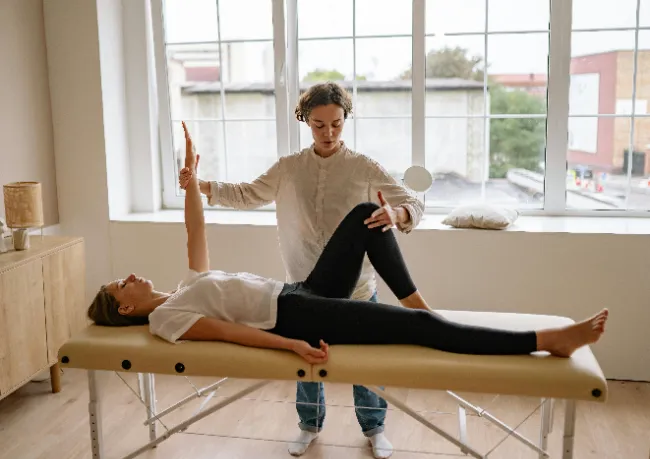
Once Dr. Kalil pinpoints the source of your discomfort, he crafts a personalized plan to restore movement and relieve pain. A typical treatment plan blends gentle spinal and extremity adjustments with soft‑tissue techniques, therapeutic modalities and rehabilitative exercises.
- Spinal and extremity adjustments: Dr. Kalil uses precise, hands‑on adjustments to realign vertebrae and joints. When the sciatic nerve or cervical nerves are compressed by misaligned joints, adjustments help reduce pressure and allow the nerve to glide freely.
- Soft‑tissue therapy: Muscles around the affected area often become tight and inflamed. Techniques such as Active Release Technique, massage therapy and cupping help relax those muscles and improve circulation. In a case involving severe sciatic pain, Dr. Kalil noted that the patient’s “whole left side, from the back to the lower leg, was pretty tight and in a protective state,” so massage therapy was used to relax the area.
- Rehabilitative exercises: Strengthening and stretching help stabilize joints and prevent recurrence. Dr. Kalil often begins with simple movements like McKenzie extensions for the low back or rotator cuff exercises for the shoulder, then progresses to core and hip strengthening. He may recommend ergonomic adjustments or warm‑up routines to address poor technique that contributes to pain.
- Therapeutic modalities: The clinic offers shockwave therapy, ultrasound, phonophoresis (delivering medication through ultrasound) and cold laser. These tools help reduce inflammation and accelerate healing. A small case series on shoulder impingement found that a multimodal protocol including soft‑tissue therapy, ultrasound phonophoresis, diversified spinal and peripheral joint manipulation and exercises resolved symptoms in four patients. Shoulder pain is one of the most common extraspinal complaints, second only to low back and neck pain.
Clinical research supports this multimodal approach. A systematic review found moderate evidence to support combining spinal manipulative therapy (SMT), exercise and standard medical care for chronic low‑back pain. National clinical practice guidelines from the AHRQ, NICE and Denmark recommend manual therapy (including SMT) alone or as part of a multimodal care plan for acute and chronic back pain. For shoulder impingement, case reports suggest that combining soft‑tissue therapy, ultrasound phonophoresis, joint manipulation and exercises can restore function, but larger studies are needed.
Dr. Kalil stresses that results vary. Some patients respond quickly to adjustments and exercises, while chronic conditions may require longer care. He always complements, not replaces, medical care and encourages patients to consult their primary physician, especially when pain is accompanied by significant weakness, numbness or other neurological deficits.
Expected Timeline and Results
Everyone heals at their own pace. Many patients with recent injuries feel significant relief after just a few sessions, while those with long‑standing or complex problems need more time. In his transcript Dr. Kalil describes a case of severe sciatic pain where the patient initially rated their pain at 9/10. After two weeks of adjustments, soft‑tissue therapy and McKenzie exercises, pain dropped to a 2–3/10. Continued rehab reduced pain to zero, and the patient returned to normal activities. This illustrates that consistent care and progressive exercises can yield impressive results.
Research suggests that combining SMT with exercise and standard medical care produces significant reductions in chronic low back‑related leg pain and disability, with benefits maintained at 12‑month follow‑up. National guidelines also recommend SMT as part of multimodal care for acute and chronic back pain. Dr. Kalil will outline a treatment schedule during your consultation and adjust the plan based on your progress.
Equipment & Tools Used
True Chiropractic Bellevue is equipped with state‑of‑the‑art chiropractic tables (including drop tables), handheld adjusting instruments and soft‑tissue tools. Therapeutic modalities such as class IV laser, shockwave therapy, mechanical traction and ultrasound/phonophoresis help reduce inflammation and accelerate healing. Digital X‑rays provide clear images when further diagnostics are needed. Dr. Kalil’s clinic also offers custom exercise programs and ergonomic counseling, so you have the tools you need at home and work.
Case Study – A Patient Success Story
A recent example illustrates the power of a comprehensive approach. An active‑duty service member presented with sharp pain radiating from the lower back down the left leg. They felt the worst pain in the morning or when transitioning from sitting to standing. Imaging confirmed irritation of both the sciatic nerve and a lumbar disc. Dr. Kalil recommended a plan of three visits per week for two weeks. The initial goal was simply to reduce pain and inflammation.
- “We adjusted in a way that would open up the discs and take pressure off the nerve,”* he explains. “The whole left side, from the back to the lower leg, was tight and in a protective state, so we used massage therapy to relax the area and introduced core exercises so the patient wasn’t using their back for every lift. We also used a bit of shockwave therapy to get the pain down”.
After two weeks the patient’s pain dropped from 9/10 to 2–3/10. Continued treatment and progressive exercises led to complete relief. They returned to full duty without limitations and now maintain occasional visits to prevent recurrence. Individual results vary, but this case shows how targeted adjustments, soft‑tissue therapy and exercise can relieve even severe nerve‑related leg pain.
Why Choose True Chiropractic Bellevue
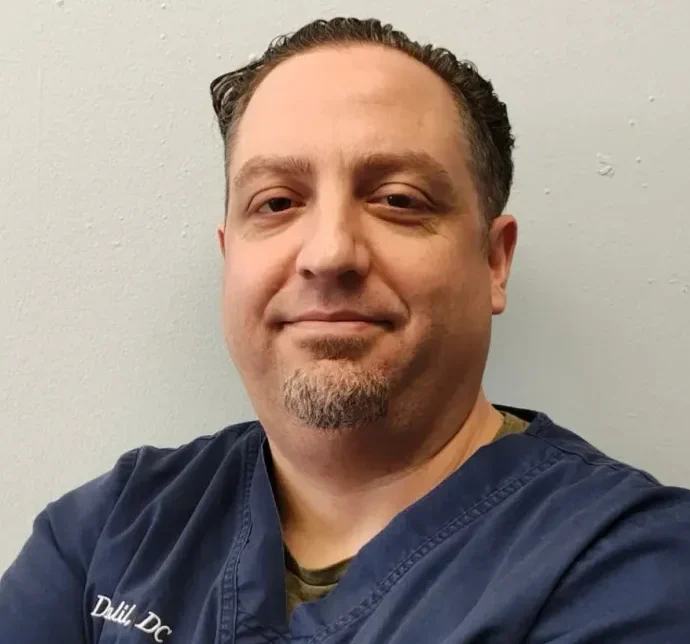
Dr. Jordan Kalil is a local from the Seattle area who studied at Central Washington University and Bellevue College before earning his Doctor of Chiropractic degree from the University of Western States in Portland. His journey into chiropractic started while working as a personal trainer. Seeing a family member’s chronic knee pain relieved by a chiropractor inspired him to pursue a profession that helps people heal naturally. Patients love his warm personality, his dedication to uncovering root causes and the way he explains each step of treatment.
At True Chiropractic Bellevue, care is personalized, non‑invasive and medication‑free. The clinic invests in advanced equipment and continues to update techniques. Dr. Kalil’s passion for sports and fitness means he understands both athletic injuries and everyday aches. Whether you’re dealing with a nagging shoulder issue, tingling down the leg or lingering stiffness, his goal is to restore function and keep you moving without relying on drugs or surgery.
Book An Appointment
Please use the booking tool below to book an appointment or by calling us on (425) 224-5533
FAQs - Arm and Leg Pain Treatment
How does chiropractic help arm or leg pain?
Adjustments relieve pressure on irritated nerves and restore normal joint motion. When misaligned vertebrae or extremity joints compress nerves, Dr. Kalil uses precise adjustments to reduce the pressure and improve nerve function. Soft‑tissue therapy and exercises complement the adjustments by relaxing tight muscles and strengthening weak ones.
Is chiropractic safe for radiating pain?
Chiropractic care is generally considered safe when performed by a licensed chiropractor. National guidelines recommend spinal manipulation for both acute and chronic back pain with or without leg pain as part of a multimodal plan. Safety depends on a thorough evaluation; Dr. Kalil reviews your history, performs tests and may order imaging to rule out contraindications. If he detects red flags, he will refer you to another healthcare provider.
How many sessions will I need?
The number of sessions depends on how long you’ve had pain, the severity of the condition and your response to care. Dr. Kalil often sees patients two to three times per week for the first few weeks and then tapers visits as symptoms improve. Acute injuries may resolve quickly, while chronic issues might require several weeks of care and ongoing home exercises.
What if my pain is caused by a pinched nerve?
Pinched nerves typically result from misaligned joints or inflamed tissues compressing the nerve. Dr. Kalil addresses the root cause with adjustments to reduce pressure on the nerve and exercises to improve mobility. If symptoms like numbness or weakness persist despite care, he may order imaging or refer you to a specialist to ensure there is no more serious underlying condition.
Can chiropractic help shoulder impingement or bursitis?
Preliminary research suggests that a multimodal chiropractic protocol – including soft‑tissue therapy, ultrasound phonophoresis, joint manipulation and exercises – can relieve shoulder impingement symptoms and restore full function. However, this evidence comes from a small case series, so larger studies are needed. Dr. Kalil combines adjustments with targeted exercises and may work alongside other healthcare providers to ensure comprehensive care.
Do I need a referral from my medical doctor?
In most cases you can schedule a chiropractic visit without a referral. If you’re under medical care for a serious condition or have recent imaging or test results, bringing that information helps Dr. Kalil tailor your care. Chiropractic complements – not replaces – conventional medicine, so communicating with your primary physician is encouraged.
Content Reviewed by