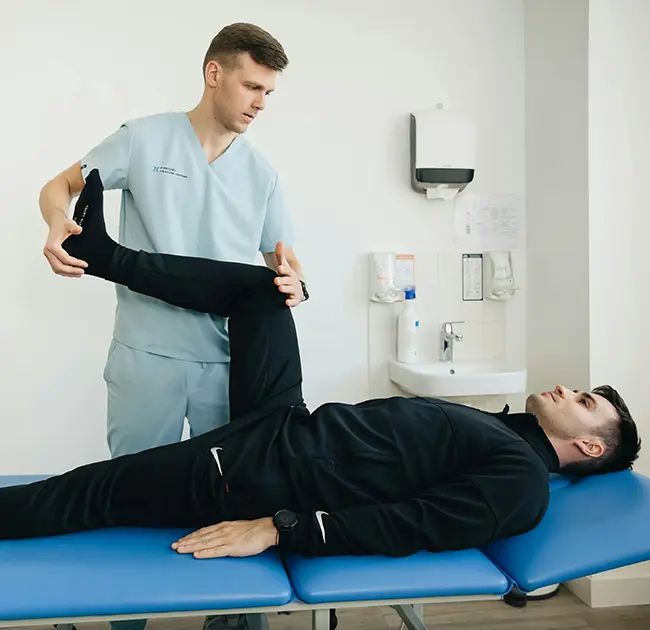
Sciatica Treatment in Bellevue, WA
At True Chiropractic Bellevue in Bellevue, WA, Dr. Jordan Kalil, chiropractor, provides non‑surgical, medication‑free care for people dealing with sciatic nerve pain. Sciatica happens when the sciatic nerve gets irritated or compressed, which can lead to pain, tingling, numbness, or weakness that travels from the lower back into the leg.
With a focused chiropractic approach, sciatica treatment in Bellevue is built around:
- Reducing irritation to the nerve
- Restoring healthy motion in the spine, hips, and legs
- Supporting long‑term strength and function so flare‑ups are less likely
In the clinic, your visit usually starts with a detailed conversation about your day‑to‑day activities, then a thorough exam of how your back, hips, and legs move. Treatment is then tailored to your goals, your lifestyle, and the specific movements that trigger or relieve your pain.
Sciatica Nerve Leg Pain
Sciatic nerve pain can show up in a lot of different ways. For some people it feels like a sharp, shooting streak from the low back down the back of the thigh. For others it is more of a deep ache, buzzing, or burning feeling that makes it hard to sit, stand, or walk for long.
Patients often notice:
- Pain or “electric” zaps when they first get out of bed
- Discomfort when driving or sitting through a workday
- Pain when bending, lifting, or going from sitting to standing
When the nerve stays irritated, even simple things like walking the dog, carrying groceries, or getting comfortable at night can become a challenge. Getting checked early can help calm the nerve before episodes become more frequent or more intense.
What is Sciatica Nerve
The sciatic nerve is the large nerve that starts in the lower back, travels through the hips and buttocks, and runs down the back of each leg. It carries both movement signals and sensation.
“Sciatica” isn’t just one diagnosis. It’s a way to describe symptoms that happen when this nerve, or the nerve roots in the lower spine that feed into it, get irritated or compressed. That irritation can come from a disc problem, tight or overactive muscles, or changes in how the joints of the spine and hips move.
The good news: in many cases, sciatica responds well to early, conservative care that focuses on motion, strength, and reducing pressure on the nerve.
What are root cause of Sciatica pain
Sciatica is usually a combo of nerve sensitivity and mechanical stress. In Dr. Kalil’s experience, common contributing factors include:
- Disc irritation or disc herniation in the lower back, especially around the L4–L5 region that feeds into the sciatic nerve
- Nerve root inflammation where the nerves exit the spine
- Entrapment of the nerve between muscles along its path, such as tight deep hip muscles or hamstrings
- Motion restrictions in the low back, hips, or knees that stop the nerve from gliding smoothly
- Repetitive or prolonged positions, like long hours of sitting, driving, or bending and lifting at work
- Posture strain and poor lifting mechanics that repeatedly overload the same discs and joints
- Degenerative disc or joint changes over time, which can narrow the space around the nerve
A detailed history and exam help narrow down which of these factors matter most in your case so the treatment plan actually targets the root issues.
What kind of treatments do you provide
Sciatica treatment at True Chiropractic Bellevue is non‑surgical and medication‑free. The goal is to open up space around the nerve, calm irritation, and rebuild strength so you can move with confidence again. Based on your exam, Dr. Kalil may use a mix of:
- Chiropractic adjustments and mobilizations
Gentle, targeted adjustments are used to improve motion in the joints of the lower back, pelvis, and sometimes the knees. When joints move better, there is less mechanical pressure on the nerve and more room for it to glide. - McKenzie‑style directional exercises
For disc‑related sciatica, specific repeated movements (often extension‑based) are used to shift pressure away from the irritated nerve root. These are coached in the office and then given as home exercises so you can keep the disc as calm as possible between visits. - Soft tissue therapy
Tight or overprotective muscles along the nerve path can trap the nerve and keep it irritated. Techniques may include:- Active Release Technique (ART) to free up adhesions in deep muscles
- Targeted massage therapy to relax guarded areas
- Cupping in select regions to improve tissue glide and circulation
- Laser therapy
Low‑level laser may be used over irritated regions to support local circulation and tissue healing, especially in stubborn or long‑standing cases. - Shockwave therapy (when appropriate)
For certain chronic pain patterns, shockwave may be added to help break up stubborn soft tissue restrictions and reduce pain so you can participate better in exercise and rehab. - Rehab and stabilization exercises
Dr. Kalil designs exercises to strengthen your core, hips, and legs so your back is not doing all the work. This can include:- Core stability work to support the spine
- Hip and glute strengthening
- Hamstring and nerve‑glide drills to keep the nerve moving freely
- Gradual return‑to‑lifting or sport‑specific drills
- Home care and activity coaching
You’ll be shown which movements calm your symptoms and which ones flare them up. Simple changes in sitting posture, lifting style, driving setup, and daily breaks are often part of the plan.
Every plan is individualized, but many patients start with more frequent visits and then taper down as pain improves and strength builds.
How long does it take to give results
Healing timelines are different for everyone, but there are some patterns Dr. Kalil commonly sees:
- Early changes
Many people notice some shift within the first few visits. That might be less intense pain, an easier time getting out of a chair, or fewer zaps down the leg. - First phase: pain reduction
For moderate to more intense sciatica, it is common to start with care about 2–3 times per week for 2–3 weeks. The focus here is calming the nerve, improving joint motion, and finding positions that relieve your symptoms. - Second phase: rebuilding and stabilizing
As pain settles, visit frequency usually decreases while exercises and activity progressions become a bigger part of care. This phase helps your back, hips, and core handle everyday forces without re‑irritating the nerve. - Long‑term support
Some patients choose periodic check‑ins to keep motion, strength, and habits on track, especially if they have a physical job, spend long hours at a desk, or play sports.
No specific outcome is guaranteed, but sticking with the plan, doing your home exercises, and respecting your activity guidelines usually leads to better results.
What are long term consequences of not getting treated
Ignoring sciatic nerve pain doesn’t make it go away. Over time, ongoing irritation can lead to:
- More frequent or intense flare‑ups that start with smaller movements
- Persistent nerve sensitivity, with numbness or weakness that lingers longer between episodes
- Compensations in other areas, like the opposite hip, knee, or mid‑back, as your body tries to avoid pain
- Reduced ability to stay active, whether that means fewer workouts, cutting back hours at work, or avoiding long drives and trips
- Sleep disruption and fatigue, which can affect mood, focus, and overall quality of life
While serious nerve damage is less common, red‑flag signs like significant leg weakness or loss of bladder or bowel control need immediate medical attention. If you are unsure how serious your symptoms are, getting evaluated promptly is the safest move.
Book An Appointment
Please use the booking tool below to book an appointment or by calling us on (425) 224-5533
FAQs - Sciatica
Can a chiropractor help with sciatica pain?
A chiropractor for sciatica focuses on improving how your spine, hips, and surrounding muscles move. At True Chiropractic Bellevue, that may include adjustments, mobilizations, soft tissue work, and targeted exercises to reduce pressure on the sciatic nerve and support long‑term function.
Is sciatica always caused by a herniated disc?
Not always. Disc irritation is a common cause, but the sciatic nerve can also be irritated by tight muscles, joint restrictions, or a mix of several factors. That is why a hands‑on exam is so important before building a plan.
How long will recovery take?
It depends on how severe the symptoms are, how long they have been around, and what is driving the irritation. Some people notice improvement within a couple of weeks, while others with more chronic or complex issues need a longer period of consistent care.
Can I still exercise if I have sciatica?
In most cases, staying gently active is better than total rest. Walking, carefully chosen stretches, and the exercises Dr. Kalil gives you are usually encouraged. High‑impact activities or heavy lifting might need to be paused or modified until the nerve settles down.
What can I do at home right now?
Short, frequent walks, posture breaks from sitting, and the specific motions that feel good during your exam are often helpful. Avoid long periods of sitting, deep bending, or heavy lifting that spike your pain. Using cold packs early in a flare and gentle heat later can sometimes ease symptoms, but always follow your chiropractor’s guidance.
Content Reviewed by