Whiplash Treatment in Bellevue, WA
If you’re searching for whiplash treatment in Bellevue, you’re likely dealing with neck pain, stiffness, or headaches. Your upper back may feel tight or locked up after a crash.
At True Chiropractic Bellevue, Dr. Jordan Kalil, DC provides conservative, non-surgical care. He focuses on the real source of your pain — not just the symptoms. He begins with a detailed history and exam. You feel heard. You feel understood. Then he builds a plan that fits your daily routine and comfort level.
Early evaluation can make recovery smoother. It also helps protect long-term mobility and confidence in your neck.
Auto Accidents
Auto accidents are one of the most common reasons people develop whiplash and other soft‑tissue injuries. A collision can snap the neck and mid‑back back and forth faster than your muscles can react, stretching ligaments, irritating joints, and leaving you sore, stiff, or strangely tired. Even low‑speed fender‑benders can shift how the neck moves, especially if you were caught off‑guard or already had desk‑related tension. In Bellevue, WA, our auto accident injury care looks at more than the painful spot. Dr. Jordan Kalil, DC, asks how the crash happened, what your day looks like now, and what movements flare things up. That helps us spot hidden strains in the neck, shoulders, low back, and even jaw that still need attention.
What causes whiplash?
Whiplash happens when the head is suddenly forced forward and back. This quick motion strains the neck’s joints, discs, and muscles. Most common triggers include:
• Rear-end car collisions
• Side-impact crashes or rollovers
• Sudden stops during driving or riding
• Contact sports like football, soccer, or hockey
• Falls that jerk the head suddenly
• Abrupt stops on buses, trains, or rides
Whiplash is rarely just “sore muscles.” Facet joints and discs often become irritated, and the muscles work overtime to protect the neck.
Symptoms can take hours or even days to show up. That’s why getting checked early — even if pain seems mild — is a smart choice.
Why should whiplash patient see a chiropractor
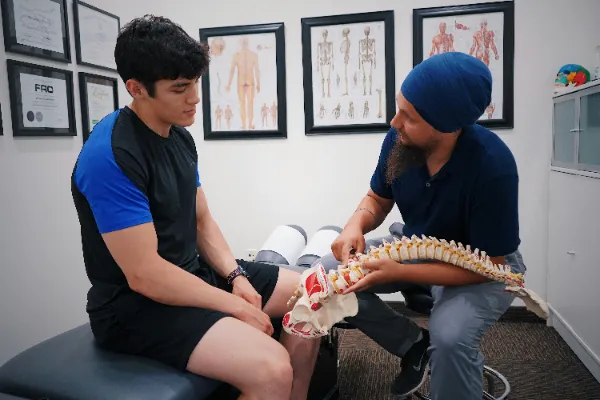
Dr. Jordan Kalil, DC explains chiropractic as helping joints move the way they are supposed to. When one area stops moving well, other areas work too hard. After an accident, that imbalance can get worse fast.
Instead of only chasing pain, he checks how your neck and upper back are working together. He evaluates motion, muscle tension, and possible nerve irritation. A detailed history and exam — including orthopedic and range-of-motion tests — helps determine whether the problem is in the joints, discs, or muscles.
If needed, X-rays or other imaging can be ordered through outside providers to rule out serious injury. Care may include gentle adjustments, mobilization, and targeted exercises to help restore normal movement patterns.
The goal is to support natural healing and reduce the risk of long-term stiffness or recurring flare-ups.
What is Whiplash ?
Whiplash is a neck injury that happens when the head is whipped back and forth or side to side faster than the tissues can control. In auto accidents, that rapid motion can irritate joints, strain ligaments, and leave muscles tight and guarded. Many patients describe neck pain, headaches, or a heavy, tired feeling between the shoulders. Others notice dizziness, jaw tension, or tingling into the arms after a crash. Because the whole spine works together, some people also feel mid‑back or low‑back soreness along with neck symptoms. Dr. Jordan Kalil, DC, often sees whiplash show up in people who already had desk‑related posture strain, so the collision becomes the last straw. Care starts with figuring out which structures are irritated so treatment can match what your neck actually needs.
What are long term consequences of ignoring whiplash injuries
• Chronic neck pain from joints and ligaments that heal poorly
• Recurring headaches linked to ongoing neck tension and nerve irritation
• Reduced neck mobility that makes driving and daily tasks harder
• Compensation patterns that overload the mid-back, shoulders, or jaw
• Sleep problems due to stiffness and nighttime discomfort
• Delayed recovery that becomes harder to correct months or years later
If a past accident still affects how you move or feel, getting evaluated can help you finally address what never fully healed.
What happens during treatment
• Detailed history and exam to understand how the injury happened and what movements trigger pain
• Orthopedic tests, muscle testing, and range-of-motion checks to identify the main pain sources
• Imaging referrals (like X-rays) when needed to rule out serious issues and guide care
• Gentle chiropractic adjustments or mobilizations to restore normal joint motion
• McKenzie-style movements to reduce nerve irritation and improve function
• Soft-tissue techniques (Active Release Technique, focused massage) to calm tight muscles
• Stabilization and strength exercises added as symptoms improve
• Additional options like cupping, laser therapy, or shockwave when appropriate for the case
• Progress reviewed regularly so care stays aligned with your recovery
Self‑care tips for whiplash recovery
Between visits, simple habits can support your healing:
• Adjust your desk and screen height to keep your neck in a neutral position
• Take short movement breaks instead of staying still for long periods
• Use gentle range-of-motion movements to prevent tightness
• Practice calm breathing to relax neck and shoulder tension
• Use brief ice in the early days to calm irritation
• Later on, heat or alternating hot/cold may help — if approved by the doctor
• Choose light walking instead of total rest, as long as symptoms don’t worsen
• Follow the specific home exercises or “reset” movements Dr. Kalil gives you
These small steps help protect your progress and keep your neck from tightening back up between visits.
Why Choose True Chiropractic Bellevue
• Care is personalized. Every plan is tailored to your lifestyle and recovery timeline.
• Thorough evaluation. History, movement testing, and imaging referrals when appropriate.
• Clear communication. You’ll always know what we are doing and why it helps.
• Advanced training. Techniques like McKenzie therapy, Active Release Technique, and functional movement screening support precise care.
• Designed for real life. Plans support returning to driving, working, and staying active.
• Long-term focus. We aim to restore confidence and prevent recurring issues.
Book An Appointment
Please use the booking tool below to book an appointment or by calling us on (425) 224-5533
Content Reviewed by